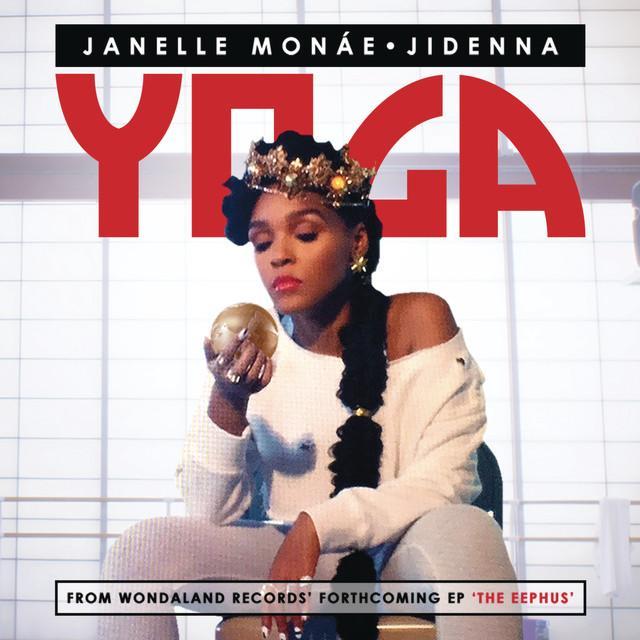
Janelle Monáe's 'Yoga' Lyrics: Decoding Dance & Rebellion
Janelle Monáe is more than just a musician; she's a visionary artist, an activist, and a master of crafting narratives through sound and visuals. Her work consistently challenges societal norms, celebrates individuality, and champions liberation. In 2015, alongside her Wondaland Records protégé Jidenna, Monáe dropped "Yoga," a track that, on the surface, might seem like a simple party anthem, but upon closer inspection, reveals a vibrant tapestry of self-expression, body positivity, and unapologetic rebellion. This article dives deep into the *Yoga Janelle Monae lyrics*, unearthing the layers of meaning behind its infectious beat and bold declarations, exploring how Monáe redefines 'yoga' from a traditional practice to a powerful metaphor for personal freedom.
The Rhythmic Allure of 'Yoga': More Than Just Dance Moves
From the very first line, "Let yo booty do that yoga," Janelle Monáe signals a clear departure from the conventional understanding of yoga. This isn't about silent meditation or a rigid sequence of poses; it's about uninhibited movement, joyful physicality, and reclaiming one's body as a source of pleasure and power. The song immediately invites listeners into a world of carefree abandon.
In the first verse, Monáe paints a vivid picture: "Party at the beach down in Copacabana / Sipping Killepitsch, got my black yoga pants on." This establishes a global, celebratory atmosphere where comfort meets confidence. Her mention of "black yoga pants" cleverly connects to the song's title, transforming functional wear into a symbol of readiness for movement and self-assuredness. She then references a vibrant club scene: "Me and Brittany, we've been down in Atlanta / Sweating in the club, call me Dirty Diana." This line not only grounds the song in a specific cultural context but also playfully reclaims the "Dirty Diana" moniker, historically associated with scandal, and re-frames it as a badge of fierce, uninhibited female energy.
The physical actions described – "Flexing like a yogi, drop it down with your hands up / Do a handstand, bend it back, put your legs up" – are explicit dance moves, but they also serve as a metaphor for mental and emotional flexibility. The ultimate declaration of self-possession arrives with, "I ain't got no worries, I'm my own private dancer." This line directly confronts the male gaze and the notion of performance for others, asserting complete autonomy over her body and her expression. She isn't dancing for anyone but herself, finding liberation in her own movement. For more on this empowering aspect, explore our related article:
Booty Yoga & Private Dancers: Janelle Monáe's Bold Lyrics.
The pre-chorus, "I wanna last, wanna last forever / I wanna dance, wanna dance all night," expresses a timeless desire for enduring joy and relentless celebration. This yearning for a never-ending night of dancing culminates in the iconic chorus: "Baby bend over, baby bend over / Baby bend over, let me see you do that yoga." This repeated command, far from being a demand, is an invitation – a playful challenge to embrace one's sensuality and physical freedom without reservation. The "yoga" here is not about spiritual perfection, but about joyful, uninhibited self-expression through movement.
Rebellious Spirit & Unapologetic Self-Expression
While the first verse sets the stage for physical liberation, the second verse of *Yoga Janelle Monae lyrics* delves deeper into Monáe's signature themes of rebellion and unapologetic individuality. She transcends the dance floor to declare her stance on life itself.
"Crown on my head, but the world on my shoulder" introduces a duality: she carries the weight of responsibility and expectations ("the world on my shoulder") even as she maintains her regal poise and power ("crown on my head"). This sets up her defiant declaration: "I'm too much a rebel, never do what I'm supposed ta." This line is quintessential Monáe, a direct rejection of societal molds and prescribed behaviors. She is committed to charting her own course, living authentically outside of imposed norms.
The metaphor extends beyond physical flexibility to life's challenges: "Bend it never break it, baby watch and I'ma show ya." This speaks to resilience, the ability to adapt and overcome without compromising one's core identity. She then brilliantly applies the "yoga" concept to her financial success: "Stretching on my cash, got my money doing yoga." This is a confident flex of her independent wealth, demonstrating control and power not just over her body, but her resources too.
Monáe further embraces her multifaceted identity with "Sometimes I'm PG, and sometimes I'm vulgar." This line celebrates complexity and refuses to be confined to a single persona. She highlights the constant vigilance required in her world with "Even when I'm sleeping, I got one eye open." But the most potent and defiant statement comes at the end of the verse: "You cannot police me, so get off my areola." This is an explicit, uncompromising assertion of bodily autonomy and a furious rejection of external control or judgment, particularly aimed at those who seek to regulate or shame women's bodies and sexuality. It's a powerful call to respect personal boundaries and freedom.
This verse solidifies "Yoga" not just as a dance track, but as an anthem for self-ownership and defiance against societal pressures. Monáe encourages listeners to find their own form of "yoga"—their unique way to express themselves and defy limitations—whether that's through dance, art, or simply living boldly.
Jidenna's Contribution: A Male Perspective on the 'Yoga' Phenomenon
The collaboration with Jidenna adds another dimension to the *Yoga Janelle Monae lyrics*, offering a male perspective that complements Monáe's narrative of liberation and self-expression. Jidenna’s verse injects a playful, more overtly sensual energy, further pushing the boundaries of what "yoga" can signify in this context.
Jidenna opens with "I said yoga, she did that yoga," acknowledging Monáe's lead and the infectious nature of her redefinition. He quickly embraces the song's spirit of hedonism and abandon with "Looking for my loafers, man I woke up in a toga." This image conjures a post-party scene, steeped in an almost Roman-esque sense of revelry, suggesting a night of complete freedom from inhibitions.
His lines, "She left my collar on like she my owner / So when she downward dog, I jump up on her," introduce an interesting dynamic. The "collar" could be a playful nod to BDSM-lite imagery, or simply a recognition of Monáe's powerful, dominant presence. He leans into the reinterpreted "yoga" poses, explicitly connecting them to sexual intimacy and pleasure. Jidenna's verse is unabashedly lustful, celebrating the physical connection: "I lo-lo-love the way you bend / Oh Lord, I'd love to break you in / Oh Lord, I'd stretch you out and in." These lines, while explicit, maintain the theme of flexibility and enjoyment through physical interaction, mirroring the physical freedom Monáe champions.
Ultimately, Jidenna expands the invitation for collective enjoyment: "Oh Lord, now you should tell a friend / Oh Lord, I pray, pray, I pray they come, come, come on over / And let they bum-bum do that yoga." His verse ensures that the message of uninhibited physical expression and pleasure is not exclusive, but an open invitation for everyone to participate in this liberating "yoga." The collaboration between Janelle Monáe and Jidenna truly highlights a shared vision of flexing freedom through music. Dive deeper into their synergy in our article:
Janelle Monáe & Jidenna's 'Yoga': Flexing Freedom Through Music.
The Enduring Message: Freedom Through Movement and Identity
Janelle Monáe's "Yoga" is a masterclass in subversion and empowerment. By recontextualizing a spiritual practice, the *Yoga Janelle Monae lyrics* create a vibrant anthem for body positivity, sexual liberation, and outright rebellion against societal constraints. The "yoga" in this song is not about traditional poses, but about the flexible, resilient, and unapologetic embrace of one's full self—mind, body, and spirit.
Monáe challenges the often puritanical views of female sexuality and expression, making it clear that a woman's body and her choices are her own. The song empowers listeners to move freely, speak boldly, and live authentically, bending the rules without breaking their intrinsic spirit. It's a celebration of duality—being both "PG" and "vulgar," a "rebel" with a "crown"—and the power found in self-acceptance.
The impact of "Yoga" lies in its ability to deliver a profound message wrapped in an irresistible, danceable package. It’s a testament to Monáe’s artistry that she can craft a catchy track that simultaneously incites joy on the dance floor and sparks conversations about autonomy and defiance. Her consistent use of art to push boundaries and champion individuality makes "Yoga" an enduring statement. Embrace your own form of "yoga"—whatever makes you feel free, powerful, and authentically you, whether it's dancing with abandon, creating something new, or simply living life on your own terms.
Janelle Monáe's "Yoga" (with Jidenna) is far more than just a song about dancing. It's a powerful manifesto disguised as a party starter, where the *Yoga Janelle Monae lyrics* serve as a vivid declaration of personal liberty. It reminds us all to let go, dance freely, embrace our multifaceted identities, and live unapologetically, bending societal expectations without ever breaking our authentic selves.